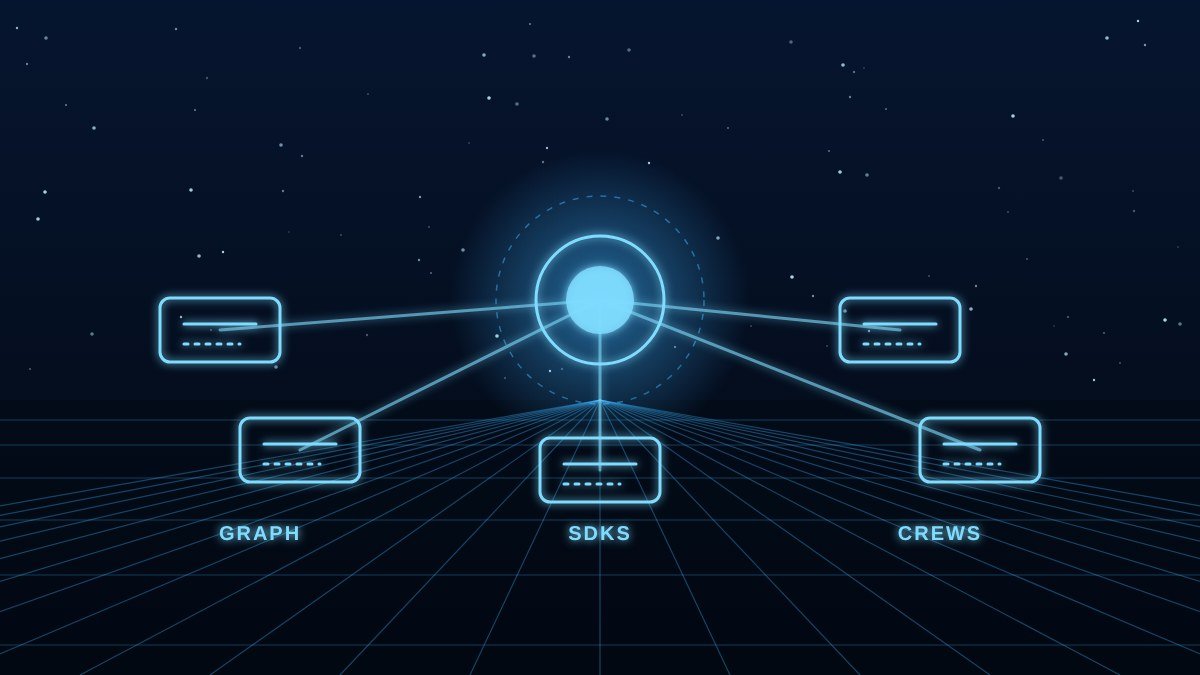
AI agent frameworks are software toolkits that handle the repeating parts of building an agent: the model loop, tool calling, state, memory, handoffs between agents and tracing. In 2026 the field splits into independent frameworks, such as graph-based and role-based options, and official SDKs from OpenAI, Google, Microsoft and Anthropic, and the right pick depends on the shape of the workload, the cloud and the model ecosystem.
Key Takeaways
- No single framework wins every case; the workload shape, cloud platform and model ecosystem decide the fit.
- Graph-based runtimes suit auditable, long-running workflows, while role-based crews suit fast multi-agent prototypes.
- OpenAI, Google, Microsoft and Anthropic all ship official agent SDKs, so lock-in is now a real selection factor.
- Microsoft Agent Framework reached 1.0 in early April 2026 and replaces two earlier Microsoft projects.
- Maturity differs: sources report durable state and approvals in 1.0-or-later releases, while the OpenAI Agents SDK was still below 1.0 in October 2026.
Agents add loops, tools and memory to a plain model call, as the site’s guides to how AI agents work and multi-agent systems explain. A framework saves the work of rebuilding those pieces, but each one bakes in assumptions about control flow, state and vendor support. This comparison sets out the main options as of early November 2026.
Table of Contents
The Short Answer
No single framework wins. Graph-based runtimes fit regulated or long-running workflows that need explicit state and human approval. Role-based crews fit quick prototypes of a team of specialized agents. Official SDKs from OpenAI, Google, Microsoft and Anthropic fit teams already committed to one ecosystem. Choosing starts with the workload, then the cloud, then the model.
Best AI Agent Frameworks in 2026 at a Glance
The table summarizes the options most comparison guides treat as the main contenders. Execution model and best-fit descriptions follow those guides; they are generalizations, and details change quickly between releases.
| Framework | Execution model | Best for |
|---|---|---|
| LangGraph | Graph with durable state and branching | Auditable, long-running and human-in-the-loop workflows |
| CrewAI | Role-based crews of agents | Fast prototypes of multi-agent teams |
| Microsoft Agent Framework | Agents plus graph workflows; Python and .NET | Azure and .NET teams; successor to AutoGen and Semantic Kernel |
| OpenAI Agents SDK | Handoffs, guardrails, sessions and tracing | Lightweight agents built around OpenAI models |
| Google ADK | Sequential, parallel and hierarchical workflow agents with A2A support | Gemini and Google Cloud teams, multimodal work |
| Claude Agent SDK | Single agent with tools | Teams wanting lifecycle control around Claude |
| Strands Agents | Model-driven loop from AWS | Teams building on AWS |
| Mastra | TypeScript-first agents | JavaScript and TypeScript developers |
On licensing, a LangChain guide lists the first four open-source options above, plus the OpenAI Agents SDK, as MIT-licensed and Google ADK as Apache 2.0. That guide comes from LangChain, the company behind one of the listed frameworks, so its framing deserves a second read.
How the Main Options Differ
Graph-based runtimes
LangChain’s graph runtime models an agent as nodes and edges with persistent state. Comparison guides credit it with production maturity and persistence, and a VDF review of open-source options says it, Microsoft Agent Framework and Pydantic AI document durable state and approvals in 1.0-or-later releases. The trade-off is more setup than a simple loop.
Role-based crews
The role-based crew framework treats agents as teammates with defined jobs, such as researcher and writer. That mental model gets a prototype running quickly, and it was designed for multi-agent work from the start. Teams that later need strict state control sometimes move that logic to a graph runtime.
Vendor SDKs
Each major lab now offers its own kit. The OpenAI Agents SDK keeps abstractions small around agents, tools, handoffs, guardrails, sessions and traces. Google’s ADK reached Python 2.0 general availability on May 19, 2026, according to a QueryNow comparison, and supports several languages. Microsoft Agent Framework reached 1.0 for Python and .NET in early April 2026, merging AutoGen and Semantic Kernel into one SDK. As of early October 2026, one tracker listed the OpenAI Agents SDK (Python) at 0.23.1, Google ADK (Python) at 2.11.0 and Microsoft Agent Framework (Python) at 1.21.0.
Managed harnesses
Above the code-level frameworks, QueryNow describes managed harnesses that run the agent loop from configuration, including Amazon’s AgentCore harness, Copilot Studio harnesses, Claude Managed Agents and the OpenAI Agents API. They trade flexibility for less infrastructure to run.
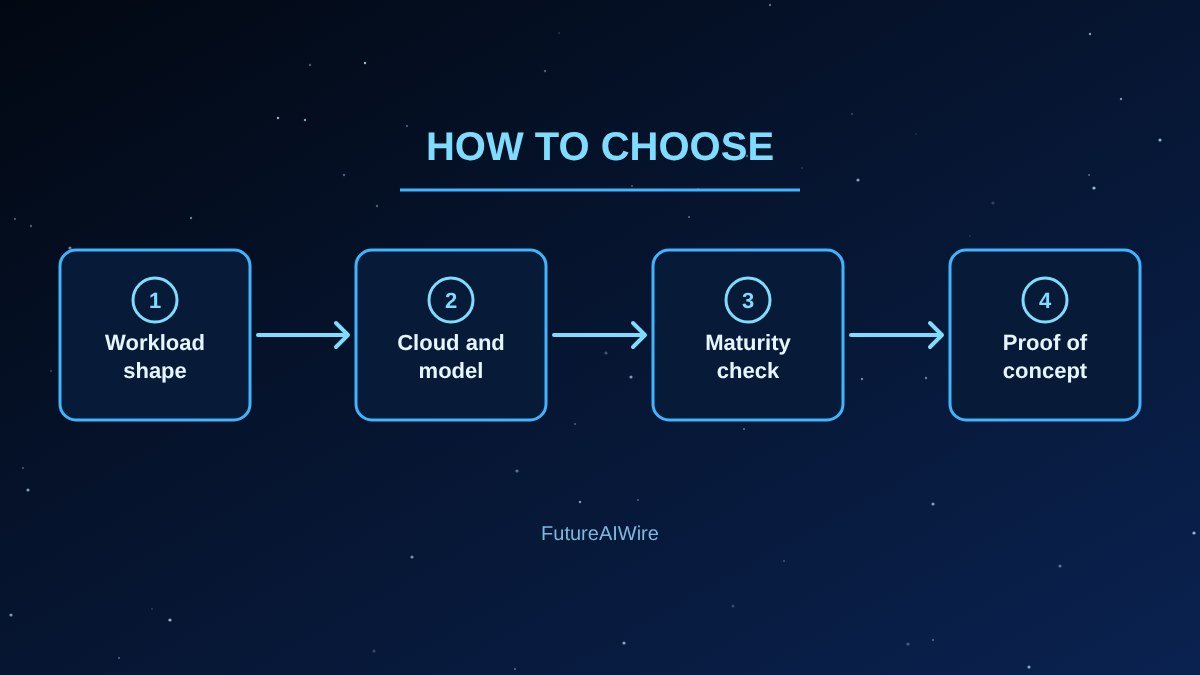
How to Choose a Framework
- Start with the workload shape. Explicit state, branching and approvals point to LangGraph; a team of role-divided agents points to CrewAI.
- Match the cloud. Azure and .NET teams look first at Microsoft Agent Framework, Google Cloud and Gemini teams at Google ADK, AWS teams at Strands Agents and OpenAI-centered teams at the OpenAI Agents SDK.
- Check maturity. Prefer releases at 1.0 or later for durable state and approvals, and treat pre-1.0 packages as more likely to change.
- Weigh lock-in. Vendor SDKs tie closely to one model ecosystem, although some, such as the OpenAI Agents SDK, can call other providers’ models.
- Check protocol support. The Model Context Protocol connects agents to tools, while the A2A protocol connects agents to each other. The MCP versus API comparison explains the difference.
- Plan for tracing and safety. Built-in tracing and guardrails matter once an agent touches real systems; the guide to security risks and controls for autonomous agents covers what to add.
Key Terms at a Glance
- Agent framework: a library that provides the model loop, tools, state and orchestration for building agents.
- Handoff: passing a task from one agent to another, a core primitive in the OpenAI Agents SDK.
- Durable state: saved progress that lets a workflow pause, resume and survive failures.
- Guardrails: checks on inputs, outputs or tool use that limit what an agent can do.
- Orchestration: coordination of agents, tools and steps, covered in the site’s guide to agentic workflows.
Conclusion
The market has shifted from one dominant library to a split between independent frameworks and official vendor SDKs. For regulated or long-running work, the graph route offers the most control. For quick experiments, role-based crews or a lab’s own SDK get started fastest. A small proof of concept on the real workload, with tracing switched on, will reveal more than any feature table. Readers new to the topic can begin with the AI agents pillar guide.
Frequently Asked Questions
Which agent framework is best for beginners?
A lightweight option with small abstractions, such as the OpenAI Agents SDK, or a role-based crew framework gets a first prototype running quickly. Beginners should still pick based on the model and cloud they already use.
What happened to Microsoft’s earlier agent projects?
Microsoft merged them into Microsoft Agent Framework, which reached 1.0 for Python and .NET in early April 2026, according to several comparison guides.
Do official vendor SDKs lock a team into one model provider?
They can, because each is designed around its vendor’s ecosystem. Some SDKs support other providers’ models, but integration is usually tightest with the vendor’s own models and cloud.
Are agent frameworks required to build an agent?
No. An agent can be written as a plain loop around a model API. Frameworks add state handling, tracing, guardrails and multi-agent coordination, which matter more as a system grows.
How do MCP and A2A relate to these frameworks?
Many frameworks support the Model Context Protocol for tool access, and Google’s ADK is reported to support A2A for agent-to-agent communication. Support differs by framework and version, so it is worth checking before committing.
How often do these frameworks change?
Very often. Trackers show new releases every few weeks, and several packages were still below 1.0 in October 2026, so version checks should be part of any selection.
Sources
- LangChain: resource guide to agent frameworks
- VDF: open-source options checked against their repositories, October 2026
- QueryNow: agent frameworks compared across Microsoft, AWS and Google
- Morph: agent framework releases and versions, October 2026
- Langfuse: comparing open-source agent frameworks
- Uvik: agentic frameworks and versions, September 2026
The Future AI Wire Editorial Team covers artificial intelligence, AI agents, agentic AI, and emerging technologies. We publish clear, research-informed explanations and practical insights to help readers understand AI developments, real-world applications, and the technologies shaping the future.