
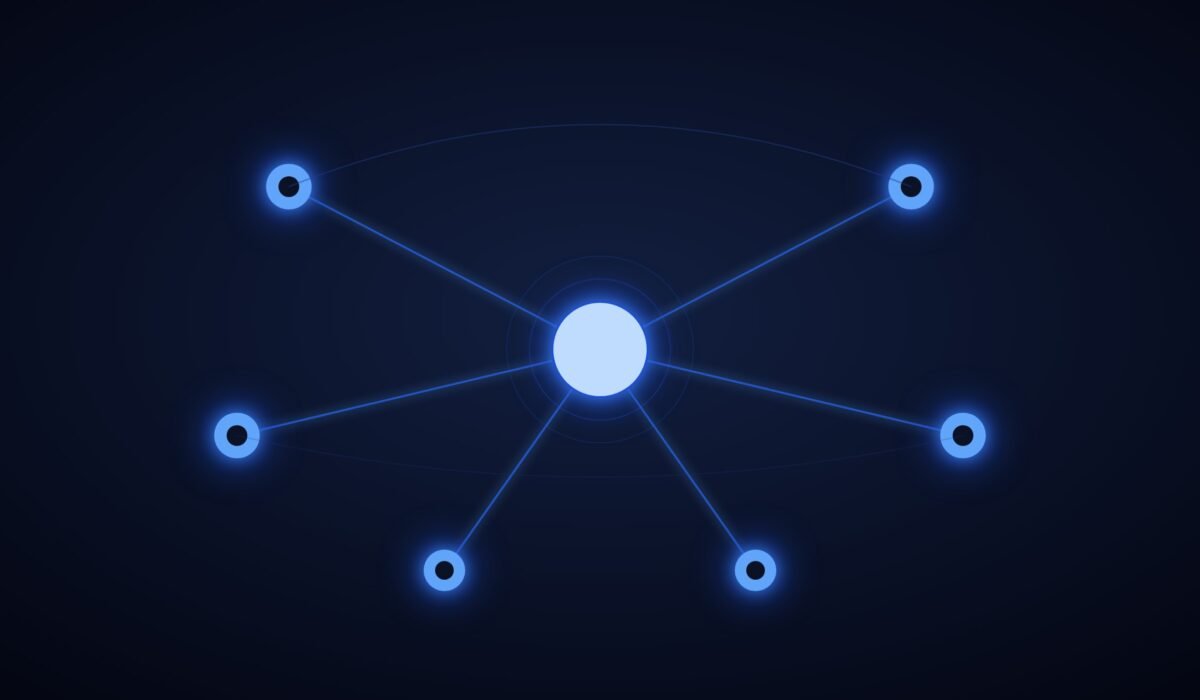
AI agent orchestration is the practice of coordinating multiple AI agents so they work together on a task, deciding which agent acts when, what information passes between them, and how their results combine into a final answer. It matters because a single agent often cannot do a complex job alone; orchestration is what turns several narrow agents into one working system.
Table of Contents
Key Takeaways
- AI agent orchestration coordinates how multiple agents share tasks, pass information, and combine results.
- The three common patterns are sequential (one agent after another), hierarchical (a manager agent assigns work), and parallel (agents work at the same time on different parts).
- Orchestration is different from a single agent using multiple tools; it specifically involves coordinating separate agents, each with its own role.
- Common orchestration failures include agents duplicating work, passing incomplete context, or getting stuck waiting on each other.
- Frameworks such as LangGraph and CrewAI provide built-in orchestration patterns so developers do not have to build the coordination logic from scratch.
What Is AI Agent Orchestration?
AI agent orchestration is the layer of logic that manages how several AI agents work together on a shared goal. Each agent in the system usually has a narrow role, such as researching a topic, writing a draft, or checking facts, and the orchestration layer decides the order they act in, what each one receives as input, and how their outputs are assembled into a final result. This differs from a multi-agent system in scope rather than in kind: a multi-agent system is the overall setup of several agents, while orchestration is specifically the coordination logic inside that setup.
How Is Orchestration Different From a Single Agent Using Tools?
A single agent that calls a calculator, searches the web, or reads a file is still one agent using tools, not orchestration. Orchestration specifically involves coordinating separate agents, each of which can reason and make decisions on its own, rather than one agent calling simple functions. The distinction matters because orchestrated systems need to manage agent-to-agent communication and conflicting outputs, problems that a single agent with tools does not face in the same way.
What Are the Main Orchestration Patterns?
Most AI agent orchestration setups follow one of three patterns, often combined within a single system.
Sequential Orchestration
In sequential orchestration, agents act one after another, with each agent’s output becoming the next agent’s input, similar to a factory assembly line. A research agent might gather information first, a writing agent then drafts content from that research, and an editing agent reviews the draft last. This pattern is simple to build and easy to debug, since each step’s failure is easy to isolate, but it is slower than patterns that let agents work at the same time.
Hierarchical Orchestration
In hierarchical orchestration, a manager agent breaks a task into smaller pieces and assigns each piece to a specialized worker agent, then combines their results. This pattern suits complex tasks with clear sub-tasks, such as planning a marketing campaign where one worker handles copywriting and another handles scheduling, because the manager agent can adjust the plan if a worker’s output does not fit.
Parallel Orchestration
In parallel orchestration, several agents work on different parts of a task at the same time, and their results are merged once all agents finish. This pattern reduces total completion time for tasks that can be split into independent pieces, such as summarizing multiple documents at once, but it requires a clear method for merging results that may disagree or overlap.
| Pattern | How it works | Best for | Main risk |
|---|---|---|---|
| Sequential | Agents act one after another | Tasks with a clear, linear process | Slow; a stuck step blocks everything after it |
| Hierarchical | A manager agent assigns and reviews work | Complex tasks with distinct sub-tasks | Manager agent becomes a bottleneck |
| Parallel | Agents work at the same time on separate parts | Independent, splittable tasks | Conflicting or overlapping results at merge time |
What Can Go Wrong in AI Agent Orchestration?
Orchestration introduces failure modes that do not exist with a single agent. Agents can duplicate work when the orchestration layer does not clearly divide responsibilities. An agent can receive incomplete context if the previous agent’s output omits details the next agent needs. Two agents can also wait on each other indefinitely in a poorly designed hierarchical setup, a problem similar to deadlock in traditional computing, where each part of a system waits for another part that is itself waiting.
These risks grow with the number of agents in a system, which is one reason most production orchestration systems keep the number of agents as small as the task allows, rather than adding agents for their own sake. Teams considering where multi-step automation becomes necessary at all can review Future AI Wire’s explainer on agentic workflows, which covers the step before orchestration: deciding whether a task needs an agent-driven process in the first place.
What Tools Handle AI Agent Orchestration?
Developers rarely build orchestration logic entirely from scratch. Frameworks such as LangGraph, built by LangChain, model orchestration as a graph of steps and let developers define how control passes between agents, including loops and conditional branches. CrewAI offers a higher-level abstraction built around defining agent “roles” and letting the framework manage hierarchical coordination between them. Both approaches reduce the amount of custom coordination code a team needs to write, though they still require the team to design which pattern fits the task, since no framework can make that judgment automatically.
Key Terms
- AI agent orchestration: The coordination logic that manages how multiple AI agents share tasks and combine results.
- Multi-agent system: A setup involving several AI agents, each with a role, working toward a shared goal.
- Sequential orchestration: A pattern where agents act one after another, each using the previous agent’s output as input.
- Hierarchical orchestration: A pattern where a manager agent assigns sub-tasks to worker agents and combines their results.
- Parallel orchestration: A pattern where multiple agents work on separate parts of a task at the same time.
Frequently Asked Questions
What is AI agent orchestration?
AI agent orchestration is the coordination logic that decides how multiple AI agents share a task, what information passes between them, and how their individual outputs combine into one final result.
What is the difference between orchestration and a multi-agent system?
A multi-agent system is the overall setup of several agents working on a goal. Orchestration is the specific coordination logic within that setup that governs order, communication, and how results combine.
Which orchestration pattern should I use?
Use sequential orchestration for linear processes, hierarchical orchestration for complex tasks with distinct sub-tasks that need a coordinating role, and parallel orchestration for independent tasks that can run at the same time.
Do I need a framework to orchestrate AI agents?
Not strictly, but frameworks such as LangGraph and CrewAI handle common coordination problems, such as passing state between agents and managing conditional branches, which otherwise require custom code to solve reliably.
What causes orchestration failures?
Common causes include agents duplicating work due to unclear role boundaries, agents receiving incomplete context from a previous step, and agents waiting on each other in a way that stalls the whole system.
Can orchestration patterns be combined?
Yes. Many production systems combine patterns, for example using a hierarchical manager agent that assigns sub-tasks, some of which then run in parallel among worker agents.
Related Reading on Future AI Wire
Sources

The Future AI Wire Editorial Team covers artificial intelligence, AI agents, agentic AI, and emerging technologies. We publish clear, research-informed explanations and practical insights to help readers understand AI developments, real-world applications, and the technologies shaping the future.