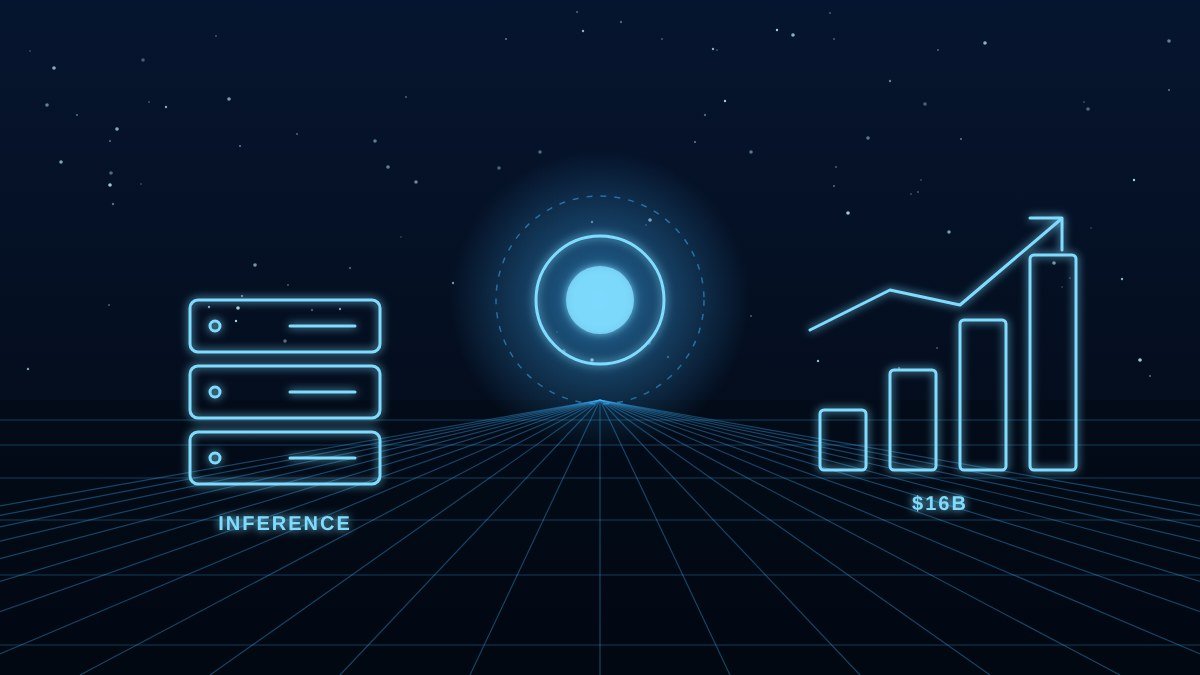
Fal AI funding reached $1.3 billion in a round led by Bessemer Venture Partners that values the company at $16 billion, double its $8 billion valuation from April, according to reports from TechCrunch and Bloomberg. Fal, which runs image, video and audio models for developers, announced the round on November 3, 2026 and says the money will buy more computing power and staff.
This article reflects reporting available as of November 5, 2026.
Key Takeaways
- Fal raised $1.3 billion in a late-stage round led by Bessemer, with Nvidia, Sound Ventures, HOF Capital and T. Rowe Price taking part.
- Bloomberg reported a $16 billion valuation, double the $8 billion set in April; Fal’s own announcement did not disclose the amount or valuation, according to WOWTALE.
- Fal announced its earlier $350 million round and the latest one together, for a combined $1.65 billion, per TechCrunch and SiliconANGLE.
- Annualized revenue passed $800 million earlier this year, which puts the valuation near 20 times revenue by simple arithmetic.
- Fal’s CEO said demand forced the company to rate-limit customers in the summer, while sources told TechCrunch that sector gross margins remain thin.
Table of Contents
The Short Answer
Fal is an AI inference startup, a company that runs already-trained models so developers can generate images, video and audio without managing servers. Its $1.3 billion round at a reported $16 billion valuation shows investors paying heavily for compute capacity and demand rather than for owning a model. The risk is that the economics depend on securing enough chips to serve customers profitably.
Fal AI Funding by the Numbers
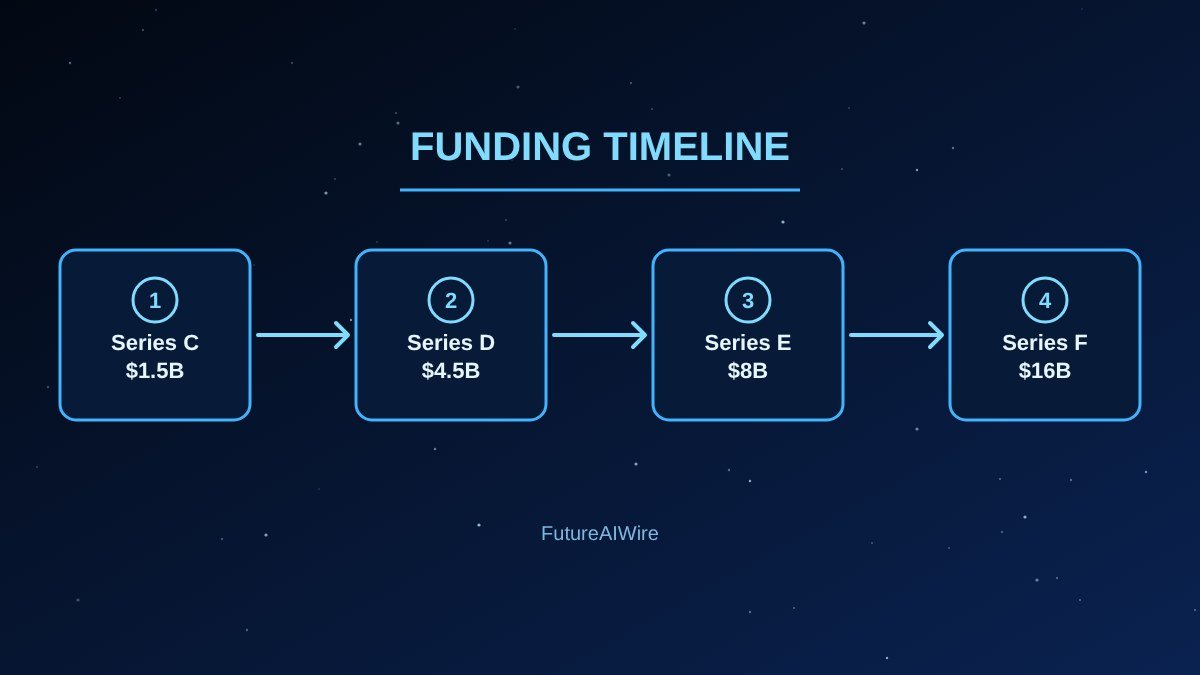
The table below tracks Fal’s rounds as reported by TechCrunch, SiliconANGLE and WOWTALE. The April round’s lead comes from FourWeekMBA and Startup Fortune; the other figures come from the primary coverage cited in the sources list.
| Round | Timing | Amount | Valuation | Lead investor |
|---|---|---|---|---|
| Series C | July 2025 | $125 million | $1.5 billion | Meritech Capital Partners |
| Series D | December 2025 | $140 million | $4.5 billion | Sequoia Capital |
| Series E | April 2026, announced November 3 | $350 million | $8 billion | Sequoia Capital |
| Series F | Closed October, announced November 3 | $1.3 billion | $16 billion (Bloomberg) | Bessemer Venture Partners |
SiliconANGLE counts more than $1.9 billion invested in the company to date. Bessemer partner Talia Goldberg is joining the board, and Fal described Nvidia as a strategic investor.
What Fal Does
Fal hosts generative media models for image, video, audio and 3D work that customers call through an API, without provisioning GPUs. For customers who run their own models, it also offers serverless deployment and dedicated GPU clusters, WOWTALE reported. SiliconANGLE lists entertainment studios, advertising agencies and game developers among its production users. Earlier TechCrunch coverage named Adobe, Canva, Perplexity and Shopify as customers.
The company was co-founded in 2021 by Burkay Gur, a former Coinbase machine learning leader, and Gorkem Yurtseven, a former Amazon developer. In the site’s explainer on how much water AI uses, the compute behind services like these is the same infrastructure that raises resource questions.
Why Demand Outran Capacity
TechCrunch tied the round to soaring demand for inference, meaning running a model after training to produce outputs, particularly from customers using open-source models. Gur told Bloomberg that the company reached a point in the summer where it could not serve all customers and had to rate-limit them. That shortage explains why the round is so large: the proceeds go toward computing power and hiring.
Revenue growth has been steep. TechCrunch reported annualized revenue above $200 million in October 2025, and Bloomberg’s reporting put it above $800 million this year. At a $16 billion valuation, that is about 20 times annualized revenue by simple division, a ratio that assumes the revenue pace holds.
How the Valuation Compares
Fal is not alone. SiliconANGLE noted that rival Fireworks AI closed $1.5 billion at a $17.5 billion valuation in July, which leaves Fal just behind it. Bloomberg has also reported that Modal and Baseten have discussed raising money at steep valuations. The site’s earlier coverage of OpenAI’s funding round and OpenAI’s deals in Abu Dhabi shows the same pattern of large capital flowing to AI infrastructure.
The caution comes from margins. Several people familiar with the finances of inference companies told TechCrunch that gross margins across the sector remain thin because compute is expensive to buy or lease. Nvidia’s role as both supplier and investor adds another dependency worth watching.
What to Watch Next
- Compute supply: whether new capacity arrives fast enough to end the rate limits seen in the summer.
- Margins: whether scale improves gross margin or the cost of chips absorbs the gains.
- Competition: how Fireworks AI, Modal, Baseten and cloud providers respond on price and speed.
- Revenue durability: whether annualized revenue keeps growing after the current surge in video and image generation.
Key Terms at a Glance
- Inference: running a trained model to produce an output, such as an image or a video clip.
- Series F: a late-stage venture round that follows the earlier lettered rounds.
- Annualized revenue: a recent revenue pace multiplied out to a full year, not audited annual revenue.
- Strategic investor: an investor, such as Nvidia here, with a business interest in the company beyond financial return.
- Rate limiting: capping how much a customer can use a service so demand does not overwhelm capacity.
Conclusion
The round confirms that the market for running models is becoming a large business in its own right, with investors backing capacity over ownership of any single model. Whether Fal can turn that demand into durable margins will decide if the valuation looks prescient or stretched. Readers following the broader money story can continue with the site’s guide to AI agents, which are expected to add to inference demand.
Frequently Asked Questions
How much did Fal raise and at what valuation?
Fal raised $1.3 billion at a reported $16 billion valuation, according to TechCrunch citing Bloomberg. The round closed in October and was announced on November 3, 2026.
Who led the round?
Existing investor Bessemer Venture Partners led it. Nvidia, Sound Ventures, HOF Capital and T. Rowe Price also participated.
What does Fal do?
Fal runs image, video, audio and 3D models for developers through an API, handling the servers and GPUs so customers do not have to.
Why did Fal limit customers last summer?
Its CEO told Bloomberg that demand outgrew capacity, so the company had to rate-limit customers. The new funding is meant to expand compute and hiring.
Is a $16 billion valuation high?
It is about 20 times the reported annualized revenue of $800 million, by simple division. Whether that is high depends on how long the growth lasts and how margins develop.
Did Fal confirm the valuation itself?
WOWTALE reported that Fal did not disclose the amounts or valuation in its own announcement. The $16 billion figure comes from Bloomberg.
Sources
- TechCrunch: Fal doubles its valuation to $16B as demand surges
- SiliconANGLE: Generative media startup fal raises $1.3B at a $16B valuation
- The Next Web: Fal doubles its value to $16B in a $1.3B round
- WOWTALE: fal raises $1.3B
- Startup Fortune: Fal doubles to a $16 billion valuation
- Bloomberg: Fal raises capital at $16 billion valuation

The Future AI Wire Editorial Team covers artificial intelligence, AI agents, agentic AI, and emerging technologies. We publish clear, research-informed explanations and practical insights to help readers understand AI developments, real-world applications, and the technologies shaping the future.